

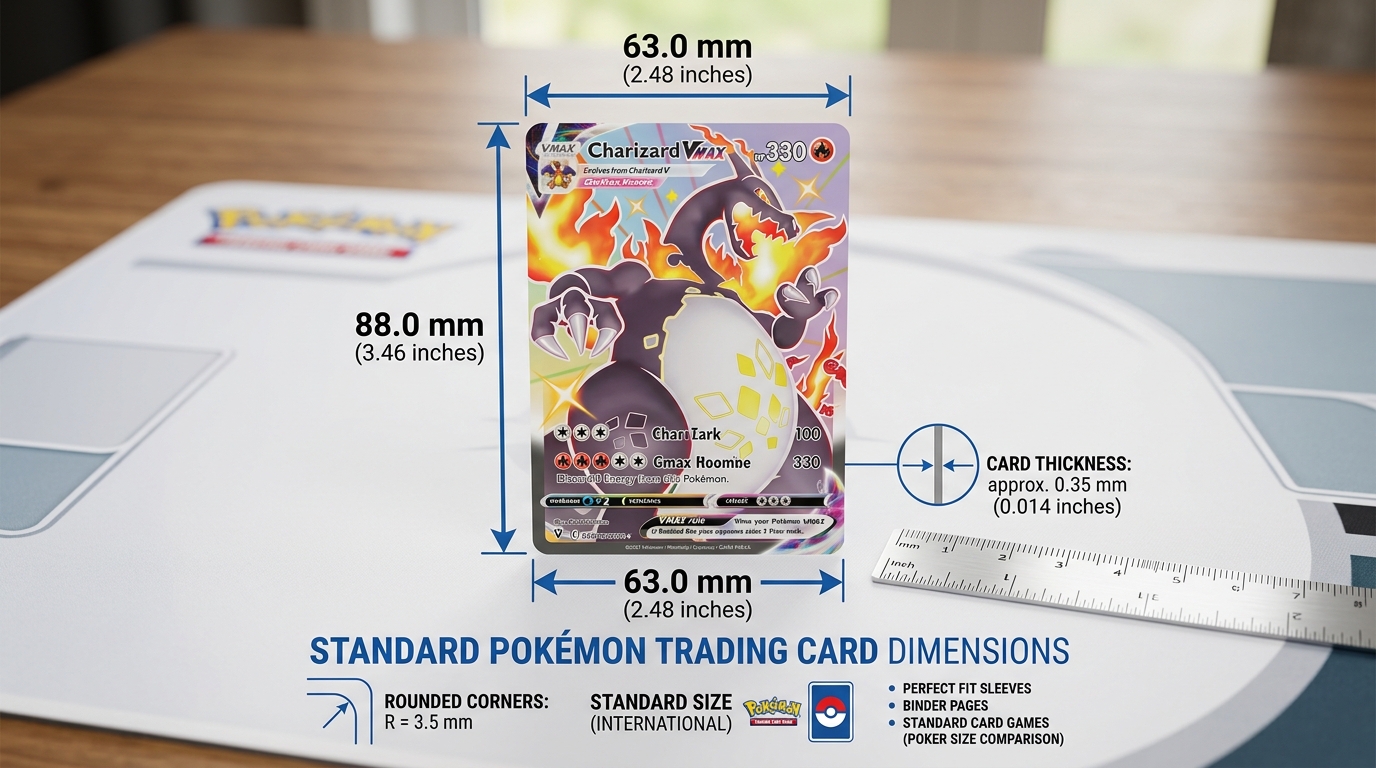
There’s something kinda magical about holding a Pokémon card. Not just because it might be a shiny Charizard, or an old Base Set relic with edges softer than old bread. It’s also because these little rectangles carry weird emotional weight. Childhood battles. Schoolyard trades. Binder flexes. Tiny cardboard drama.
And funny enough, one of the most overlooked parts of Pokémon cards isn’t the artwork, rarity, or attack damage. It’s size. Literal size. Measurements. Millimeters. Fractions of inches. Sounds boring? Yeah, until it suddenly matters a lot.
Maybe you’re buying sleeves. Maybe you’re sorting cards into binders. Maybe you’re trying to spot counterfeit Pokémon cards. Or maybe you just looked at your card and thought, “Wait… are all these exactly the same size?” Pretty fair question, honestly.
The truth is, Pokémon Card Dimensions matter more than most people realize. In collecting, grading, trading, storage, and even gameplay, exact dimensions can mean the diff between preserved value and accidental damage. Weirdly dramatic for cardboard, but there we are.
This guide covers everything from Pokémon card dimensions in inches and mm to thickness, weight, sleeves, binders, storage boxes, and fake card detection. So yep, we’re measuring cardboard today. And somehow, it’s gonna be more intresting than it sounds.
| Specification | Measurement (Inches) | Measurement (MM) |
|---|---|---|
| Standard Card Width | 2.5 in | 63.5 mm |
| Standard Card Height | 3.5 in | 88.9 mm |
| Card Thickness | 0.012 in | 0.305 mm |
| Card Weight | 1.78 g | |
| Aspect Ratio | 5:7 | 5:7 |
| Corner Radius | 0.125 in | 3.18 mm |
| Sleeve Size | 2.64 × 3.58 in | 67 × 91 mm |
| Toploader Size | 3 × 4 in | 76 × 101 mm |
| Oversized/Jumbo Card | 5 × 7 in | 127 × 178 mm |
| Tournament Deck Size | 60 cards | 60 cards |
| Sleeved Deck Height | 35–40 mm |
What Are Pokémon Card Dimensions?
Let’s start with the core thing everybody wants to know.
The standard Pokémon card size is:
- Width: 2.5 inches
- Height: 3.5 inches
- Width: 63.5 mm
- Height: 88.9 mm
That means standard Pokémon card dimensions follow the same size as most major trading cards in the TCG world.
In simple terms:
- Card Width = 63.5 mm
- Card Height = 88.9 mm
- Aspect Ratio = 5:7
That’s the official standard used in the Pokémon Trading Card Game, often shortened to Pokémon TCG.
This exact size matters because every accessory sleeves, binders, deck boxes, and grading slabs is built around these measurements.
It’s kinda wild how such tiny numbers control an entire hobby ecosystem.
Pokémon Card Dimensions in Inches and MM
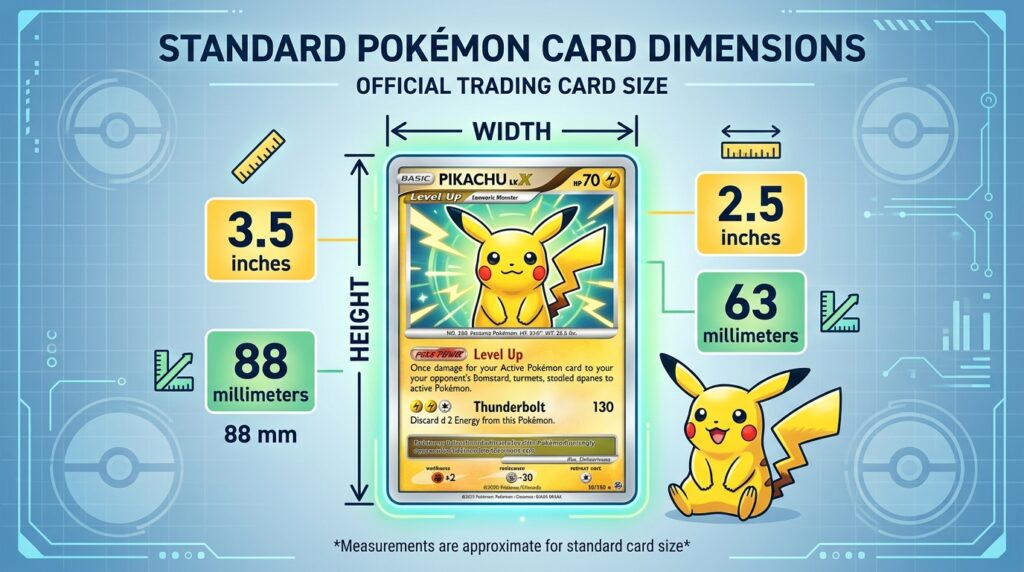
People often search:
- What size are Pokémon cards?
- Exact Pokémon card dimensions
- Pokémon card measurements in mm
- Pokémon card dimensions in inches
Here’s the clean answer.
Standard Pokémon Card Measurements
- Width: 2.5 inches / 63.5 mm
- Height: 3.5 inches / 88.9 mm
- Thickness: 0.012 inches / 0.305 mm
- Weight: 1.78 g
- Corner Radius: 0.125 inches / 3.18 mm
That corner radius part? People forget it exists. But the rounded corners are actually important in counterfeit detection and grading.
A fake card often gets corner curvature slightly wrong. And collectors notice. Ohhh yes, they notice.
Pokémon Card Thickness and Weight
Now this is where things get sneaky.
Not all cards feel identical in hand, especially:
- Holo cards
- Full art cards
- Secret rares
- Promo cards
Still, standard Pokémon card thickness is roughly:
- 0.012 inches
- 0.305 mm
Average card weight is around:
- 1.78 grams
The materials used in card construction usually include:
- Layered cardstock
- Printed surface coating
- Core material
- Protective finishing
The quality of Pokémon card material affects:
- durability
- stiffness
- bending resistance
- print feel
English and Japanese cards can feel slightly diff too.
A lot of collectors swear Japanese prints have better texture and cleaner print quality. Honestly… they kinda do.
Pokémon Card Material and Construction
A Pokémon card isn’t just “cardboard.”
It’s more layered than people think.
Typical card construction includes:
- Front print layer
- Core opacity layer
- Back print layer
- Protective finish
This layered design helps prevent transparency during play. If cards were too thin, players could identify cards from the back under bright light. Big no-no.
The card durability depends heavily on:
- printing quality
- cardstock quality
- foil layering
- protective coating
This matters for both players and collectors.
A tournament player wants cards to survive shuffling. A collector wants cards to age gracefully. A child wants to throw Mewtwo onto the bed and forget about it. Different priorities, y’know.
Are All Pokémon Cards the Same Size?
Mostly yes.
But there are exceptions.
Standard cards in the Pokémon Trading Card Game all follow official size standards.
That includes:
- Basic Pokémon cards
- Evolution Pokémon cards
- Trainer cards
- Item cards
- Supporter cards
- Energy cards
- Special Energy cards
- Stadium cards
But there are special card types.
Oversized Pokémon Cards
Also called:
- Jumbo cards
- Oversized Pokémon cards
Typical dimensions:
- 5 × 7 inches
These often come in:
- Elite Trainer Box (ETB) promotions
- Special Collection Box sets
- Limited releases
They’re not tournament legal, obviously.
But they’re fun. Ridiculous. Slightly impractical. And weirdly charming.
Pokémon Card Dimensions vs Other Trading Cards
Let’s compare trading card dimensions across popular games.
| Card Game | Width | Height |
|---|---|---|
| Pokémon TCG | 63.5 mm | 88.9 mm |
| Magic: The Gathering | 63.5 mm | 88.9 mm |
| Yu-Gi-Oh! | 59 mm | 86 mm |
| KeyForge | 63.5 mm | 88.9 mm |
Pokémon Card Dimensions vs Magic: The Gathering
Pokémon card dimensions vs Magic The Gathering?
Exactly the same.
Both use standard TCG sizing:
- 2.5 × 3.5 inches
That means many sleeves fit both.
Pokémon Card Dimensions vs Yu-Gi-Oh!
Here’s where it changes.
Yu-Gi-Oh! cards are smaller.
That means:
- Pokémon sleeves are too loose for Yu-Gi-Oh
- Yu-Gi-Oh sleeves are too small for Pokémon
Simple enough.
Best Sleeves for Pokémon Cards
Protection starts here.
If you care even slightly about your collection, use sleeves. Seriously.
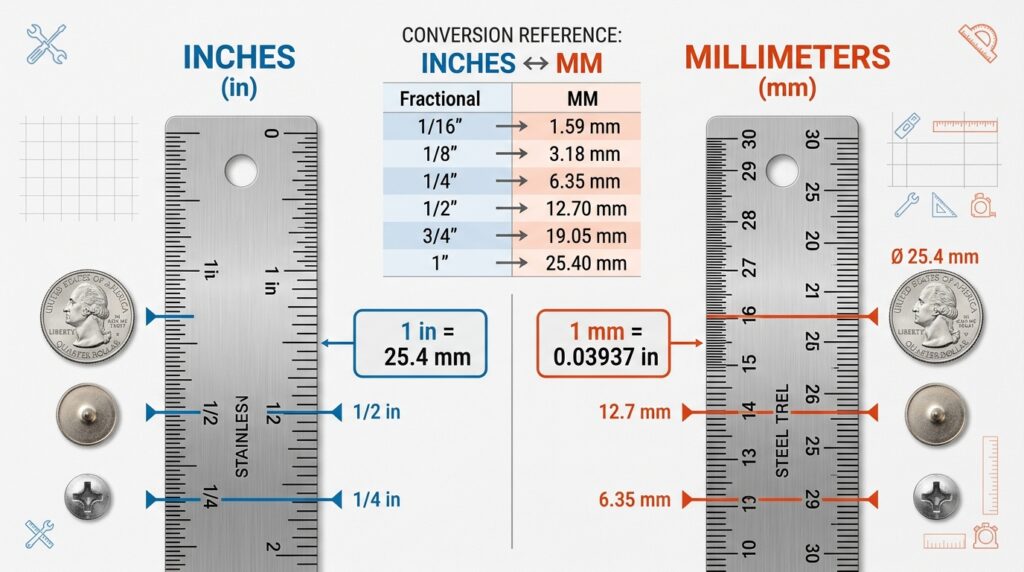
Standard Pokémon card sleeve size:
- 2.64 × 3.58 inches
- 67 × 91 mm
This gives enough space for easy insertion without crushing corners.
Popular sleeve options include:
Penny Sleeves
Cheap. Thin. Functional.
- Good for storage
- Good for bulk cards
- Not amazing for play
Classic penny sleeves are affordable and useful.
Premium Sleeves
Better protection.
Popular brands:
- Dragon Shield
- Ultra Pro
- Ultra Pro Eclipse
These offer:
- stronger durability
- better shuffle feel
- improved edge protection
For expensive cards like a Holographic Charizard card, premium sleeves are kinda mandatory.
Double Sleeving for Maximum Protection
Collectors and competitive players often use double sleeving.
That means:
- inner sleeve
- outer sleeve
Benefits:
- dust resistance
- moisture resistance
- edge protection
It feels slightly overkill until one accidental drink spill changes your opinion forever.
Best Toploader for Pokémon Cards
If sleeves are armor, toploaders are tanks.
Standard toploader size:
- 3 × 4 inches
- 76 × 101 mm
Toploaders provide rigid protection for:
- valuable cards
- shipping
- long-term storage
They’re excellent for:
- vintage cards
- PSA submissions
- trade protection
A sleeved Blastoise inside a toploader feels almost invincible. Almost.
Pokémon Card Storage Solutions
Storage matters wayyy more than beginners realize.
Bad storage bends cards, damages corners, and lowers value.
Common Pokémon card storage solutions include:
Binders
Great for display and organization.
Best choices:
- side-loading binder
- zip binder
- padded binder
Popular format:
- 9-pocket binder
These work beautifully for collection viewing.
A good trade binder feels oddly satisfying to flip through.
Binder Pocket Size for Pokémon Cards
Standard binder pockets are designed for standard TCG cards.
Look for:
- snug fit
- acid-free material
- side-loading design
Best for:
- rare cards
- collection display
- long-term storage
Cheap binder pages can damage edges over time. Not ideal.
Storage Boxes for Bulk Cards
For larger collections, boxes are better.
Popular sizes:
- 400-count box
- 800-count box
- 1600-count box
These are great for:
- bulk cards
- deck organization
- duplicates
Label them properly or future-you will suffer. Bit dramatic, but true.
Deck Building and Card Dimensions
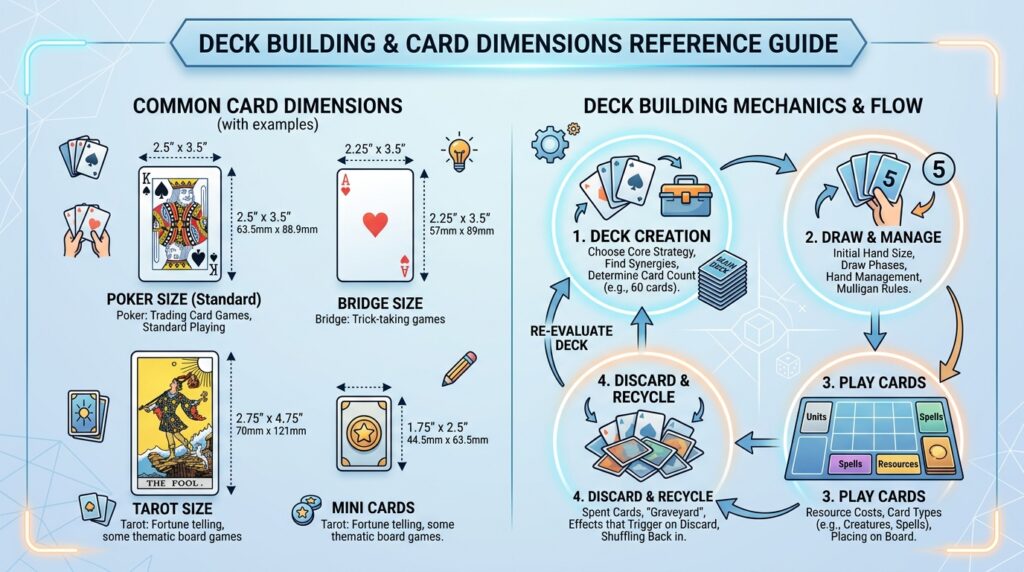
A legal tournament deck contains:
- 60 cards
During deck building, card dimensions matter because uniformity affects:
- shuffling
- tournament legality
- fair gameplay
A sleeved 60-card deck usually measures:
- 35–40 mm in height
That varies based on sleeve thickness.
Competitive players care deeply about consistency. One odd-sized sleeve can create problems.
Tiny differences matter in tournaments. Super tiny.
Pokémon Card Protection Guide
Here’s the ideal protection stack.
For ordinary cards:
- sleeve
- binder
For rare cards:
- sleeve
- toploader
- storage box
For expensive cards:
- sleeve
- semi-rigid holder
- grading prep
Humidity control matters too.
Best storage environment:
- cool
- dry
- low sunlight
Sun damage is brutal. Cards fade. Colors wash out. It’s kinda heartbreaking, honestly.
How to Detect Fake Pokémon Cards by Dimensions
This is where measurements become seriously useful.
Counterfeit detection often uses dimensional analysis.
Things to inspect:
- width
- height
- thickness
- weight
- corner radius
Signs of fake Pokémon cards:
- Wrong card dimensions
- Incorrect weight
- Poor print quality
- Weak cardstock
- Off-color backs
- Bad corner cuts
A real card should feel consistent.
Fake cards often feel:
- too flimsy
- too glossy
- oddly thick
Card Weight Test
Compare suspicious cards to known genuine ones.
If the weight is clearly off, that’s a red flag.
Thickness Test
Measure using precision calipers.
Even small differences can expose fakes.
Corner Radius Test
Yes, collectors actually check corner radius.
That’s dedication. Or obsession. Maybe both.
Pokémon Card Grading and Dimensions
When submitting to grading companies like:
- PSA
- Beckett
Condition and dimensions matter a lot.
Graders inspect:
- centering
- edges
- corners
- surface
- authenticity
Even tiny dimension irregularities can raise suspicion.
Cards trimmed by even a tiny amount can fail authentication.
That’s why serious collectors handle high-value cards with almost absurd care.
And honestly, it makes sense.
Why Pokémon Card Dimensions Matter More Than You Think
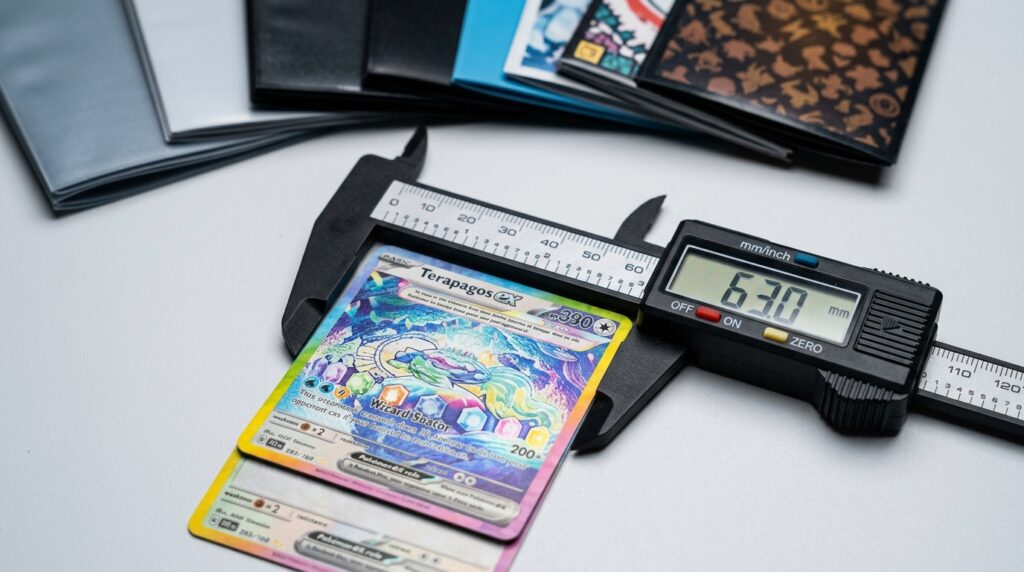
At first glance, measurements sound boring.
But they affect almost everything in collecting.
Pokémon cards → have → dimensions
Pokémon cards → require → sleeves
Pokémon cards → stored in → binders
Pokémon cards → protected by → toploaders
That little chain pretty much explains the hobby.
Dimensions influence:
- protection
- storage
- authentication
- grading
- gameplay
A card being even slightly off can change everything.
Funny how a few millimeters can decide value, legitimacy, and preservation.
Frequently Asked questions
What are the exact Pokémon card dimensions?
Standard Pokémon cards measure 2.5 × 3.5 inches (63.5 × 88.9 mm), which is the official size used in the Pokémon TCG.
Are all Pokémon cards the same size?
Most standard cards are the same size, including Pokémon, Trainer, and Energy cards. However, jumbo or oversized Pokémon cards are much larger.
What size sleeves do Pokémon cards need?
Standard Pokémon card sleeves should be 67 × 91 mm (2.64 × 3.58 inches) for a proper fit and better protection.
How thick is a Pokémon card?
A standard Pokémon card is around 0.012 inches (0.305 mm) thick, though holographic and special cards may feel slightly different.
How can dimensions help detect fake Pokémon cards?
Fake cards often have incorrect width, height, thickness, or weight, making dimension checks useful for counterfeit detection.
Read this Blog: https://maxenkad.com/things-that-are-8-inches-long/
Final Thoughts
The world of Pokémon collecting is full of excitement rare pulls, nostalgic finds, shiny promos, and dream cards. But beneath all that excitement sits something weirdly practical: measurements.
Understanding Pokémon Card Dimensions helps you protect your cards, store them properly, choose the right sleeves, and detect fakes with more confidence.
So whether you’re collecting vintage Base Set cards, building a competitive deck, or carefully storing your prized Charizard, dimensions matter. Quite a bit, actually.
And maybe that’s part of what makes this hobby so fun. It lives in both worlds at once childhood wonder and meticulous detail.
Tiny cardboard rectangles. Huge emotional value.
Funny how that works.